

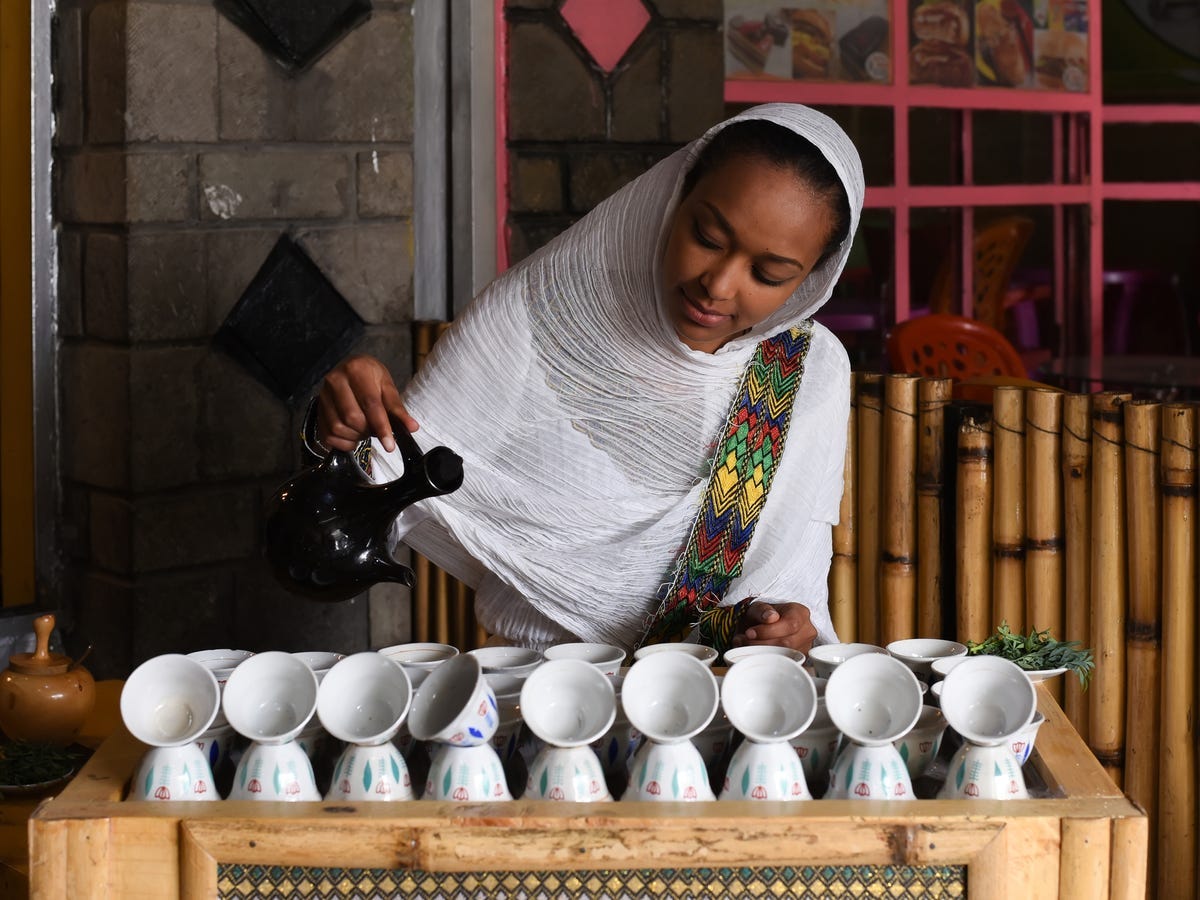
The Ethiopian coffee ceremony, known as 'buna,' is more than just drinking coffee; it's a social and cultural ritual that has been passed down through generations. To be invited to a coffee ceremony is a sign of deep respect and friendship.
The process begins with the washing of green coffee beans, which are then roasted in a pan over a charcoal brazier. The aroma fills the air, and guests are invited to savor the scent. Once roasted to perfection, the beans are ground by hand using a mortar and pestle.
The ground coffee is then brewed in a traditional clay pot called a 'jebena.' The jebena is filled with water and placed over the fire. As the coffee brews, it creates a rich, intense flavor unique to this method. The host pours the coffee from a height into small, handleless cups, a skill that requires precision.
Guests are served three rounds of coffee. The first, 'abol,' is the strongest. The second, 'tona,' is made by adding more water to the same grounds. The final round, 'baraka,' meaning 'to be blessed,' is the lightest. Each round has its own significance, and it is considered impolite to leave before completing all three.